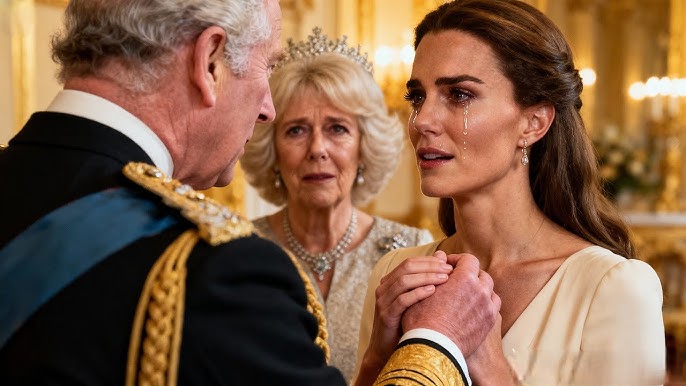
The scene inside the gilded chamber was one of palpable tension. Courtiers shifted nervously as cameras captured the moment King Charles cleared his throat and prepared to speak. His words carried weight, and the gravity of the situation was not lost on anyone present. With a single sentence, he altered the course of royal history, effectively placing Catherine above Camilla in terms of symbolic authority. Observers noted that this declaration marks a significant shift in the monarchy's public narrative, as it positions Kate not just as a princess but as the heart and face of the Crown itself.

Royal experts are calling this declaration “a direct blow to Camilla,” the Queen Consort. By elevating Kate's status in such a public and dramatic fashion, King Charles has stirred speculation about the dynamics within the royal family. Camilla, who has often been seen as a stabilizing figure alongside Charles, now faces a challenge to her role and influence. This moment could signal a new era in which Catherine assumes a more prominent position, potentially reshaping the monarchy's future.
The public response to King Charles's announcement has been overwhelmingly positive for Catherine. As news spread, crowds gathered in the streets, cheering and celebrating her newfound status. No longer just a princess, Kate has emerged as a symbol of modern royalty, embodying the values and spirit of the late Queen. This public support reflects a shift in perception, as many view her as a relatable figure who represents the future of the monarchy (source: UK Enquire).

Queen Elizabeth II's legacy has been a guiding force for the monarchy, and King Charles's declaration emphasizes the importance of continuity in royal traditions. By naming Kate as the torchbearer of the Queen's legacy, Charles is not only honoring his mother but also signaling a desire to modernize the monarchy while respecting its historical foundations. This balance